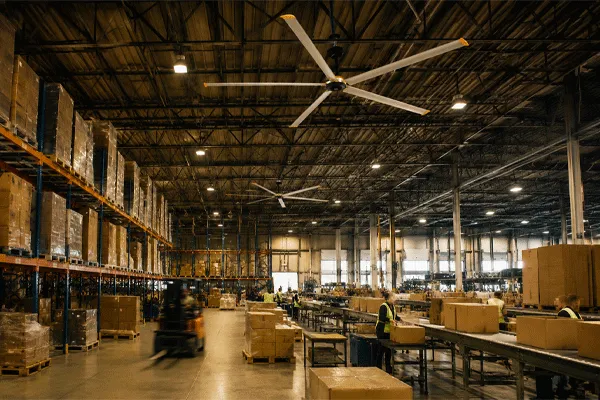
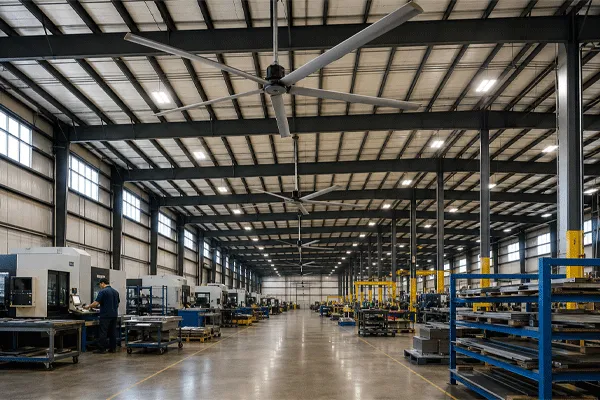
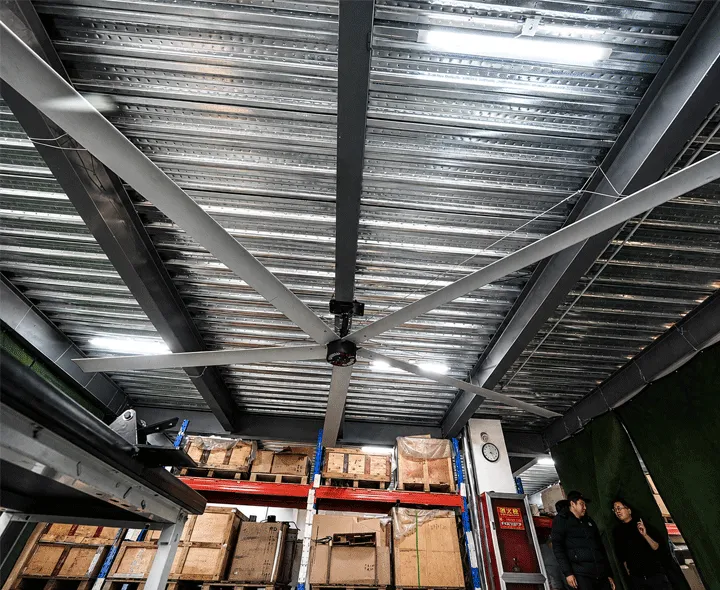
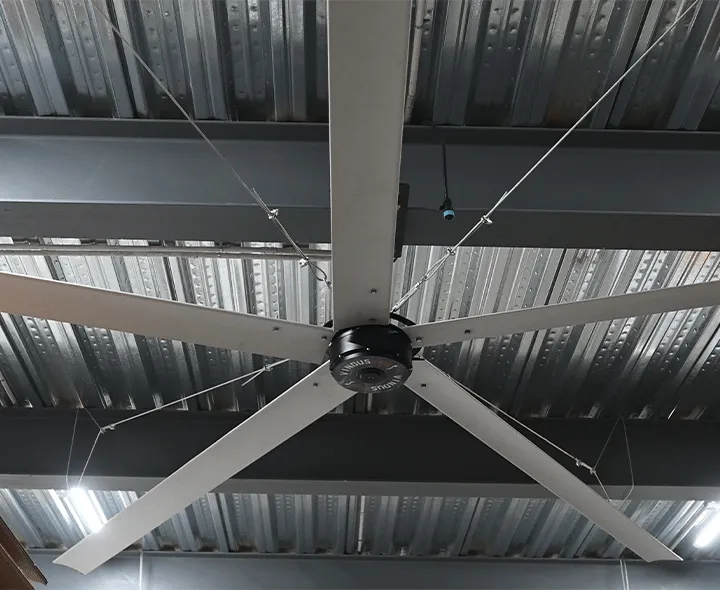
Sweltering summers, frigid winters, and stagnant air sabotage comfort in warehouses, gyms, and factories. Uneven temperatures inflate energy bills and drain morale.?Ventiladores de techo HVLS wipe out these uncomfortable conditions—gently balancing heat layers, cutting costs, and elevating productivity.
Big industrial ceiling fans—high?volume, low?speed (HVLS) fans—move massive amounts of air at gentle speeds. Stretching up to?24?ft, one fan balances hot and cold layers across 20?000?sq?ft, trimming HVAC runtimes 20–40?% and delivering uniform comfort in industrial and commercial spaces.
1. What defines an industrial fan as HVLS?
Before diving into specs, let’s clarify why the industrial y comercial world calls these giants “HVLS.”
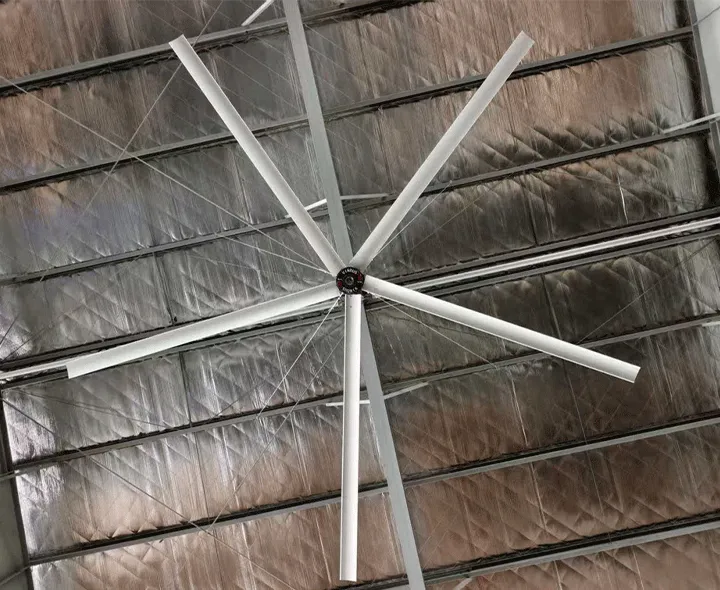
High?Volume, Low?Speed (HVLS) units rotate at just 50–90?RPM, yet their heavy?duty aluminum or composite aspas del ventilador stretch 8–24?ft. That scale produces a wide, slow-moving column of air that spreads evenly before rising up walls—creating a continuous convection loop.
“One single HVLS fan can replace up to?20 traditional ventilador de piso o drum fan units, freeing precious floor space and slashing maintenance.” — Field Test, Midwest HVAC Consultants
Quick comparison: The table below summarizes the essential design contrasts.
| Design Element |
Ventilador HVLS |
Tradicional ventilador comercial |
| Envergadura de la hoja |
8–24?ft |
2–5?ft |
| Velocidad |
<?90?RPM |
>?300?RPM |
| Coverage per unit |
Up to 20?000?sq?ft |
400–600?sq?ft |
| Typical noise |
<?45?dB |
65?–?70?dB |
Those whisper?quiet acoustics prove invaluable in hospitality halls and office spaces where low noise is mandatory.
2. How do big industrial ceiling fans improve airflow and air circulation?
Unlike box fans that blast a narrow jet, an HVLS fan produces a massive, slow “air plate” that circulates whole?building air.
The resulting airflow pattern:
- Pushes a suave brisa across the floor, dispersing stagnant pockets.
- Move massive amounts of air (140?000?CFM+), diluting fumes near heavy machinery.
- Cycles warm air downward in winter, ensuring maintaining consistent temperatures without drafts.
Because the loop covers ceiling?to?floor height, it lowers temperature and humidity extremes and discourages mold and mildew in barns, aircraft hangar bays, and distribution hubs.
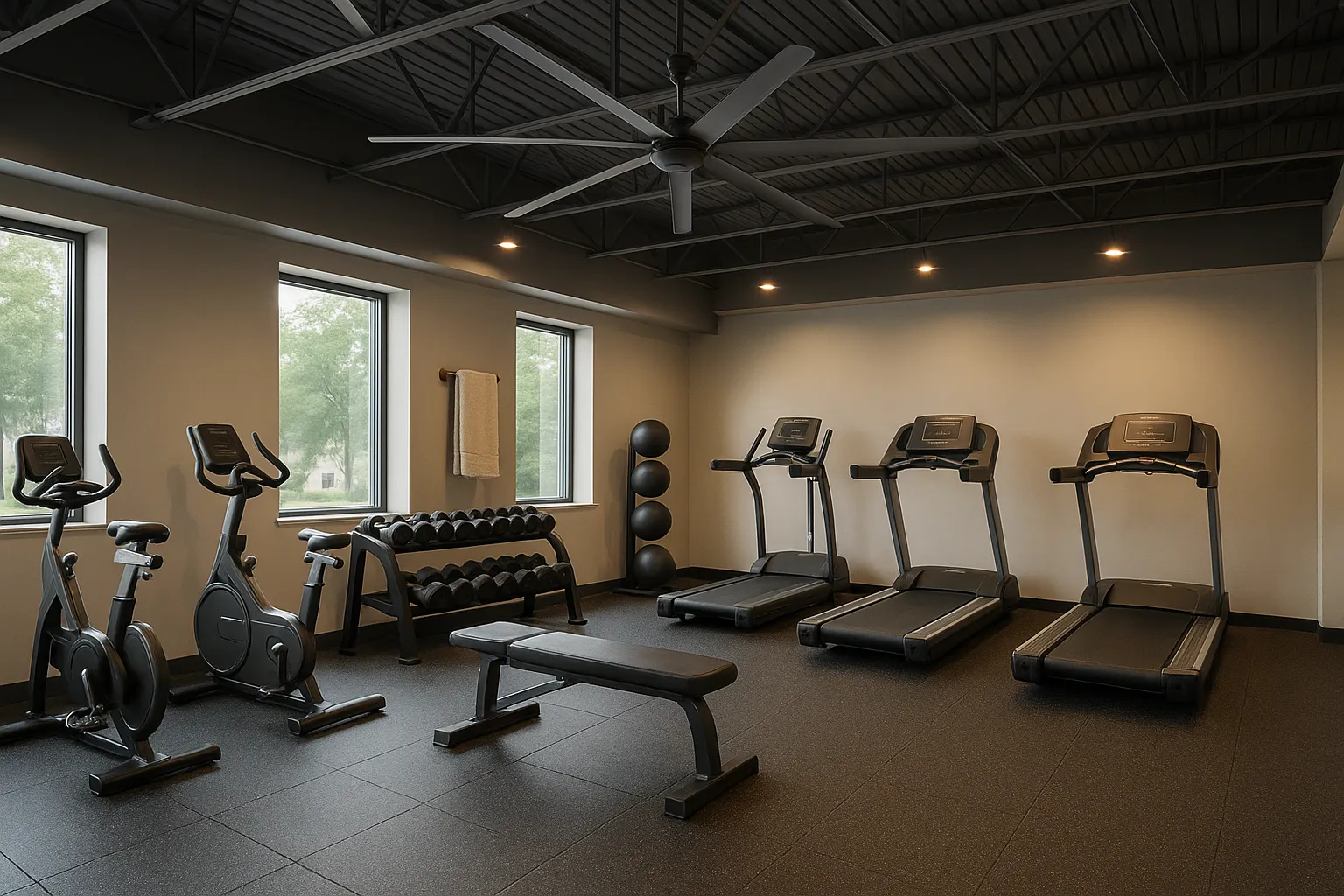
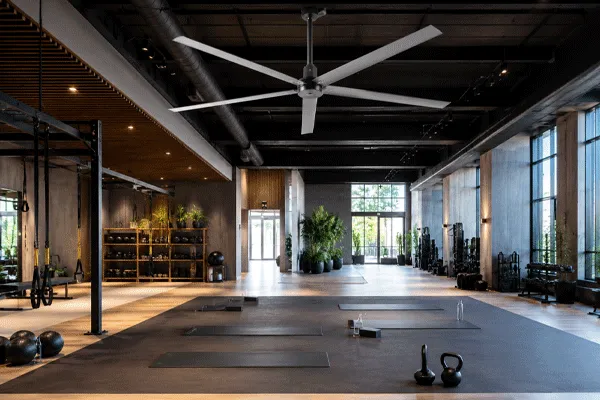
hvls ceiling fan in fitness centers
3. Can commercial HVLS fans really slash energy bills?
To appreciate savings, you need context. The short note below sets the scene for the numbers that follow.
Intro to Table: The data compares annual electricity use before and after HVLS adoption.
| Tipo de instalación |
Sq?Ft |
Pre?HVLS kWh / yr |
Post?HVLS kWh / yr |
Significant energy savings |
| Depósito – Phoenix |
120?000 |
870?000 |
560?000 |
36?% |
| Gym & Fitness Centers – Texas |
40?000 |
390?000 |
255?000 |
35?% |
| Aircraft Hangar – Ohio |
65?000 |
610?000 |
395?000 |
35?% |
Energy regulators count HVLS technology toward overall energy reduction credits, making the fans rebate?eligible.
Read real?world results on our?ventiladores hvls para almacén página.
4. Diameter, CFM, and fan?blade design—choosing the right size
Selecting the right diameter isn’t guesswork; it’s about clearance, ceiling height, and desired CFM.
Quick sizing guide
- 8?–?14?ft: workshops, retail, office spaces, barns <=?15?ft tall
- 16?–?20?ft: typical depósito or gym ceilings 20–30?ft
- 22?–?24?ft: aircraft hangar, megastores, distribution centers >?30?ft
Rule of thumb: Tip clearance should exceed 2?ft from walls or racking to preserve laminar flow.
Why CFM matters
The chart illustrates the airflow difference between blade spans.
| Diámetro de la hoja |
Max?CFM |
Coverage (sq?ft) |
| 14?ft |
85?000 |
9?000 |
| 20?ft |
168?000 |
18?000 |
| 24?ft |
210?000 |
22?000 |
“CFM” is cubic feet per minute. A 20?ft HVLS rated 168?000?CFM equals 15 pedestal fans—but draws under 1?kW.
Internal link: Explore our M650?series hvls fans to see aerofoil options.
5. Destratification fans vs. directional fans—Which fan helps regulate temperatures?
Facility managers often ask whether they can substitute spot coolers for HVLS units. This table spells out the trade?offs.
| Criterion |
Alto voltaje destratification fans |
Directional fans / spot coolers |
| Cobertura |
Whole?building |
Workstation |
| Velocidad |
<?90?RPM, bajo nivel de ruido |
1?000–3?000?RPM |
| Lo mejor para |
Temperature balance, control de clima |
Intense cooling |
| Energy draw |
0.8–1.5?kW?(24?ft) |
0.25?kW?each?×?quantity |
Fan solutions often combine both: HVLS for background equilibrium, directional ventiladores de techo comerciales above weld bays or ovens.
Cita
“Installing HVLS plus task fans cut our summer complaints to zero while trimming facturas de energía 28?%.” — Facilities Manager, Ontario OEM
6. Installation essentials for warehouses, gyms, and event centers
Proper mounting guarantees safety and performance; the bullets summarize must?do checks.
- Ceiling mounted hardware must anchor into I?beam or engineered joist rated 2?000?lb+.
- Maintain 1.5?×?blade diameter of unobstructed radius.
- Keep 3?ft below sprinkler deflectors (NFPA?13 compliance).
- Use integrated variador de frecuencia controllers for auto speed regulation.
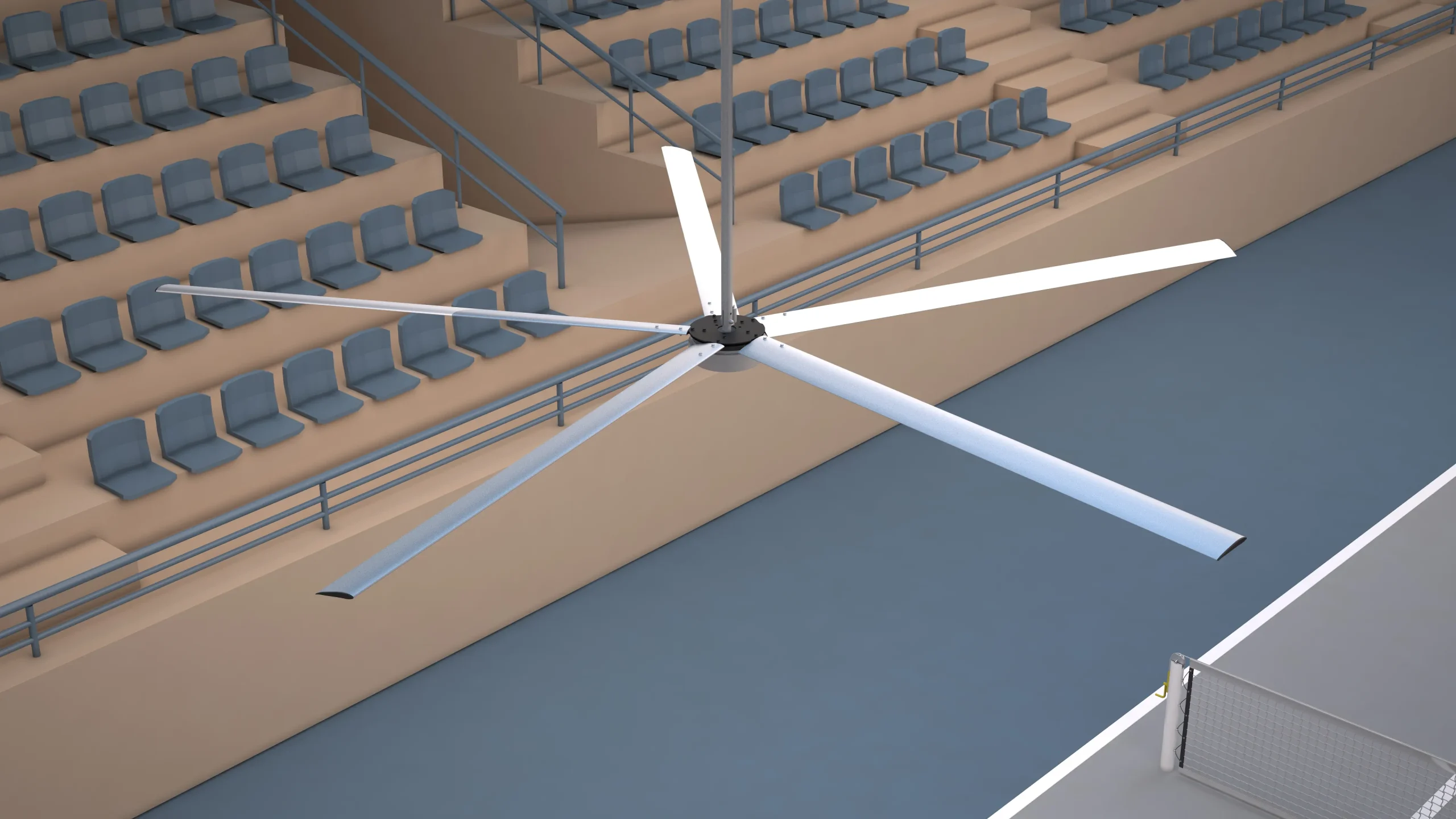
event centers big industrial ceiling fans
Safety certifications further ensure reliability.
| Requirement |
Estándar |
| Motor |
UL?507 or IEC?60335 |
| Vibration |
ISO?14694 |
| Hub design |
Lock?tight, anti?drop |
| Optional mist kits |
IP65 rating |
Internal link: Download CAD mounts from our ventiladores de techo industriales para fabricación resource center.
7. Smart controls—VFD, BMS, and HVAC system integration
Modern HVLS fans aren’t just big blades—they’re IoT devices.
- Variador de frecuencia (VFD) modulates speed by ambient sensors—ensuring energy?efficient runs.
- BACnet/Modbus gateways feed data to your BMS.
- Heat?reclaim mode reverses airflow in winter, minimizing hot and cold layers.
Internal link: API specs live on our ventiladores de gran volumen y baja velocidad para página.
8. Case studies: cutting overall energy and boosting comfort
Real?life numbers validate the theory—here are two highlights.
Solar?panel plant – Jiangsu, China
Problem → 95?°F shop floor, 12?% defect spike
Solution → Four grandes ventiladores de techo industriales (20?ft)
Result → 6?°F drop, 9?% quality gain, 14?month ROI, comfort and productivity soared.
College sports center – Florida, USA
Problem → Heat exhaustion in athletes
Solution → Three 24?ft units plus mist option
Result → 42?% fewer incidents, concession sales up?16?%.
Internal link: Explore more on our commercial ceiling fans for sports?centers página.
9. Buying guide—how to shop for large fans online
The checklist below demystifies procurement for facility managers.
- Define goals—cooling, drying, dust suppression.
- Measure space—clearances, obstructions, ceiling height.
- Check specs—CFM, amperage, torque, bearing rating.
- Verify supplier—ISO?9001, CE, UL, warranty ≥?15?yrs.
- Request simulation—CFD airflow mapping.
- Consider extras—oscillate mounts, lighting or mist kits.
Ready for a quote? Reach out via our fabricante de ventiladores hvls página.
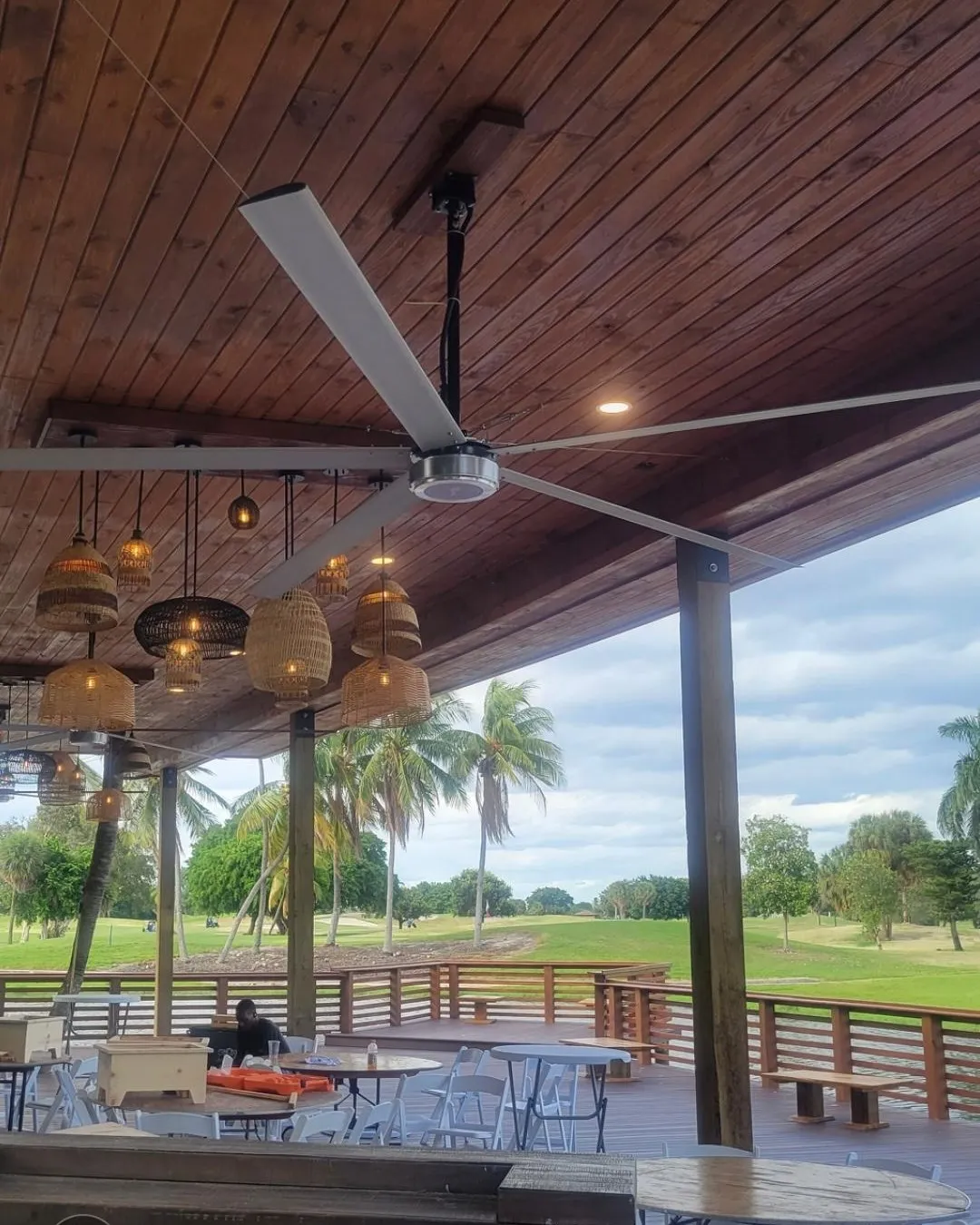
hvls outdoor ceiling fans
10. Preguntas frecuentes
These answers tackle the queries we receive most from facility operators.
How many HVLS fans do I need for a 50?000?sq?ft warehouse?
Generally two or three 20?ft units spaced 60?ft apart, adjusted for beams.
Do big ass fans? outperform other brands?
Big ass fans? sparked the category, but competitors now match specs; compare industrial grade efficiency and warranties.
Will HVLS fans curb mold in barns?
Continuo movimiento del aire dries bedding, reducing microbe growth.
?Son ruidosos los ventiladores HVLS?
At <?45?dB—library level—they beat many ventilador de piso unidades.
Do HVLS fans interfere with sprinklers?
Installed per NFPA?13—3?ft below deflectors—they remain compliant.
Can HVLS fans run with radiant heating?
Yes. Reverse mode circulates roof heat downward, boosting system efficiency.
Summary – What to Remember
Before the bullets, a brief recap: HVLS technology delivers cost?effective comfort across massive footprints.
- HVLS big industrial ventiladores move massive amounts of air yet sip power.
- One unit replaces multiple drum fan systems, freeing floor space.
- Smart variador de frecuencia controls unlock 20–40?% overall energy ahorros.
- Ideal for warehouses, centros de fitness, event centers, barns, and hangar bays.
- Our plant supplies top?notch solutions—from CFD sizing to turnkey install—so contact us today for energy?efficient airflow that elevates comfort and productivity.
Need tailored advice? Visit the big industrial fans for manufacturing knowledge hub or schedule a free airflow audit now.