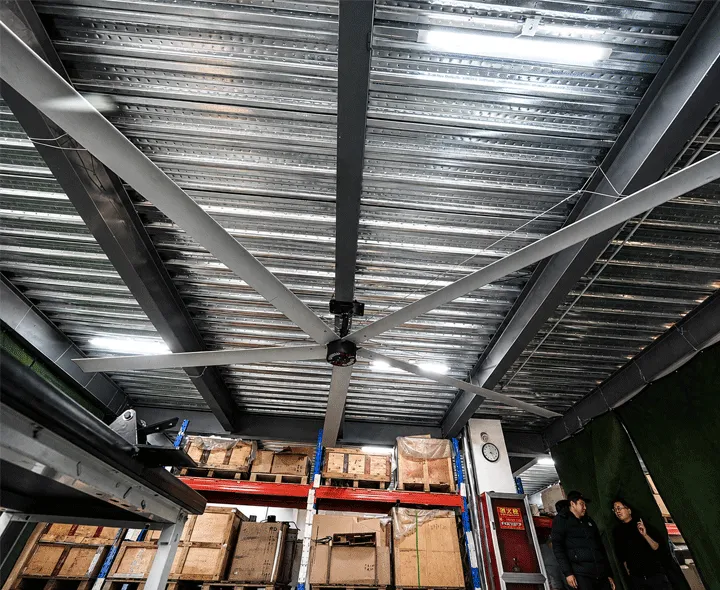
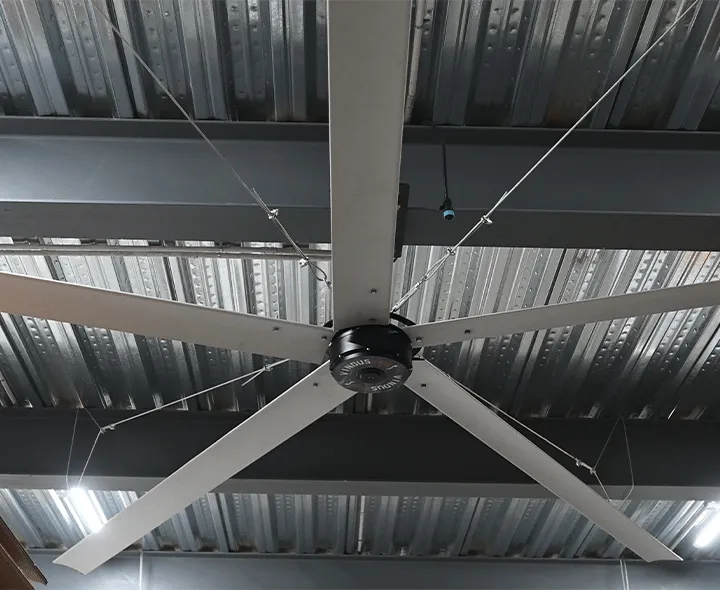
Stuffy warehouses, hot gym rafters, and soaring energy bills drain profit and morale. Ignoring airflow only worsens those hot?and?cold spots. A high?quality?HVLS fan from a trusted fan manufacturer fixes it fast—lower temps, happier teams, lower costs.
The?best?HVLS ceiling fans in 2025 come from a handful of proven manufacturers that pair large diameter blades with direct drive motors. They move huge volumes of air for pennies a day, cutting energy bills 20?40?% in factories and warehouses.
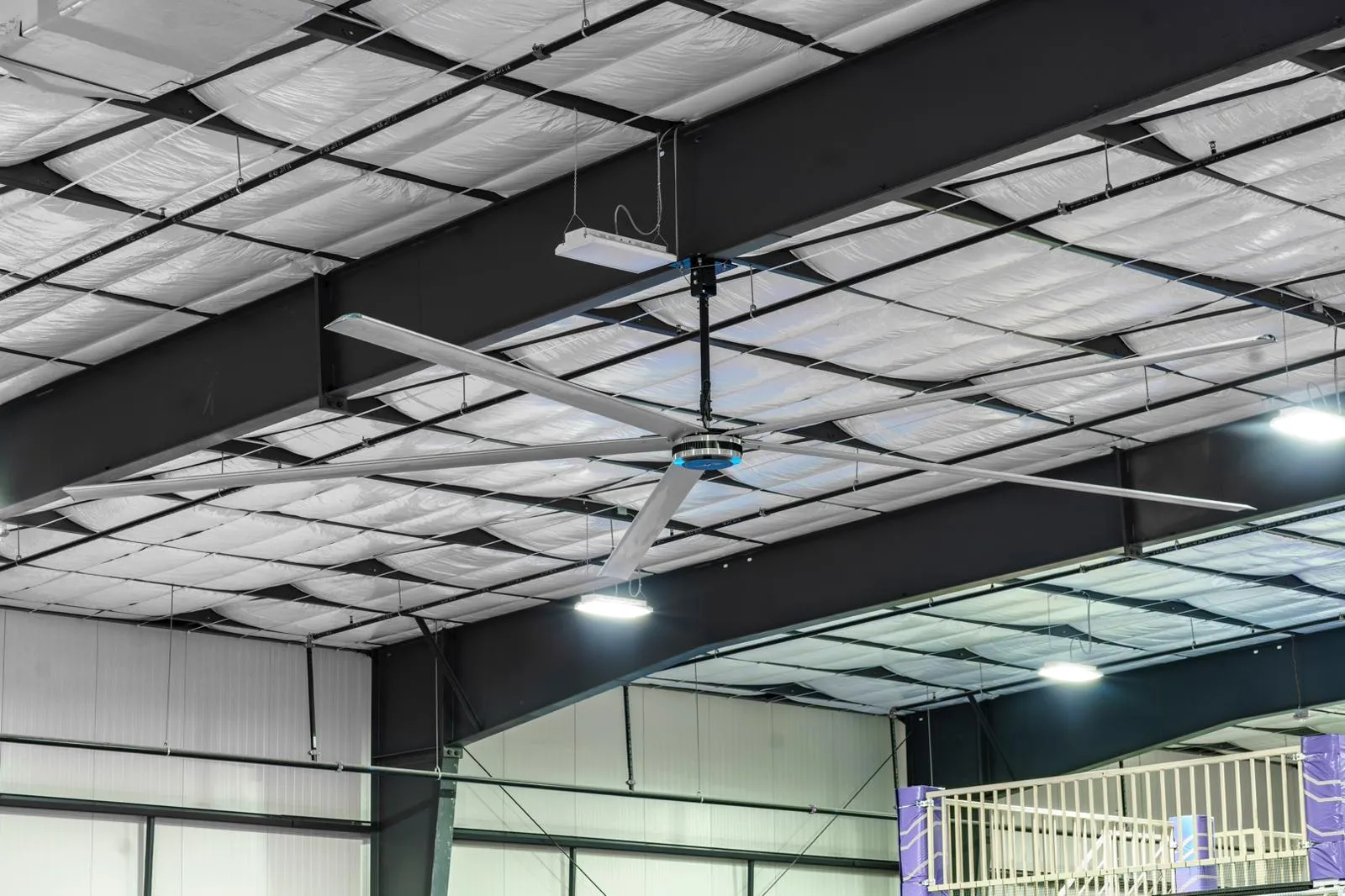
best?HVLS ceiling fans
Article Outline
- What Makes an HVLS Fan Different from a Standard Industrial Fan?
- Who Are the Top HVLS Fan Manufacturers in 2025?
- How Do HVLS Ceiling Fans Improve Airflow and Energy Efficiency in Large Spaces?
- Warehouse Cooling: Which Fan Size Works for 8?Feet to 24?Feet Ceilings?
- Comparing Big Ass Fans, Hunter Industrial, and Other Fans of?2025
- Life?Cycle Cost: Running Cost vs. Pedestal Fans and Small Fans
- Smart Control Options & Integration with Building Management Systems
- Case Study: Significant Energy Savings in Industrial Environments
- FAQs – Everything Buyers Ask About Commercial HVLS Fans
- Action Steps & Checklist to Pick the Best HVLS Fans Today
1. What Makes an HVLS Fan Different from a Standard Industrial Fan?
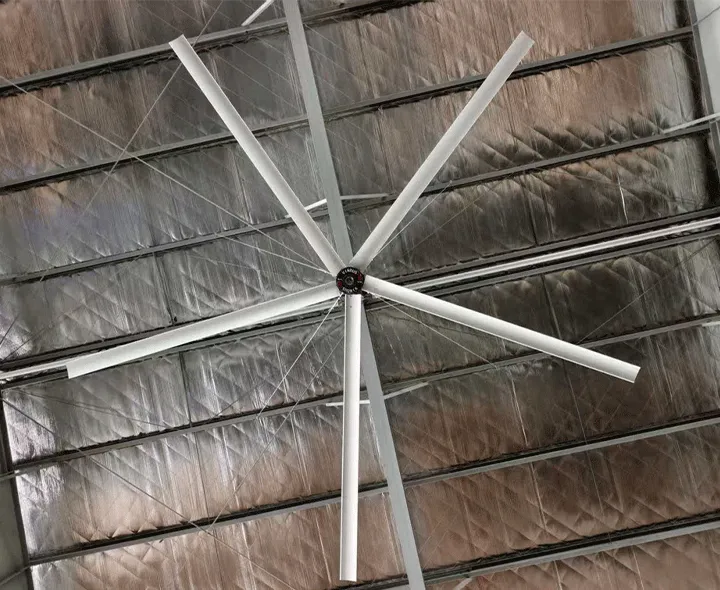
Large ceiling fans spin at low speed—often <70?RPM—yet shift a staggering amount of air. The secret is a large diameter blade (up to 24?feet) that keeps air circulation steady without drafts.
Bullet?quick comparison
- HVLS fan: high-volume, low-speed; destratifies warm?air in winter.
- Industrial fan (box or axial): high?speed, noisy, limited reach.
- Energy savings: HVLS cuts energy consumption 30?% by supporting HVAC systems rather than competing with them.
Quote from a facility engineer
“These fans are designed for industrial and commercial rooftops 30?ft high but run quieter than your home fridge.”
| Spec |
Industrial Ceiling Fan |
Commercial HVLS |
| Flow (CFM) |
20?000 |
220?000 |
| Noise (dB) |
70 |
45 |
| Payback |
3?yrs |
18?mo |
Explore the tech inside the M650 Series HVLS Fans—our flagship energy?efficient line.
2. Who Are the Top HVLS Fan Manufacturers in 2025?
Fan manufacturers in?2025 fall into three tiers:
| Rank |
Brand |
Signature Model |
Niche Strength |
| 1 |
KUUL Fans |
M750 |
Low?noise industrial hvls fan with direct drive motor |
| 2 |
Big Ass Fans |
Powerfoil X4 |
Iconic for stadiums & large areas |
| 3 |
Hunter Industrial |
Titan |
Energy?efficient retrofit for 20?ft rafters |
| 4 |
Refresh Fans |
R?Series |
Budget solution for large spaces |
| 5 |
Breezetech |
Delta?24 |
Smart control options + cloud analytics |
Need specifics? Our in?house plant builds the best HVLS designs under ISO?9001 for industrial spaces across five continents.
Learn more in our manufacturing solution overview.
3. How Do HVLS Ceiling Fans Improve Airflow and Energy Efficiency in Large Spaces?
A single 18?foot HVLS ceiling fan destratifies up to 22?000?sq?ft—spreading cool air in summer, recycling warm air in winter. This destratification halves heating costs and boosts productivity by reducing humidity and sweat.
Key benefits list
- High?volume air movement without blast
- Cuts latent heat → better ventilation and cooling and ventilation synergy
- Substantial energy savings: up to 40?% HVAC reduction
- Reduce humidity and safeguard inventory
Check how warehouse HVLS fans optimize airflow and energy in distribution corridors.
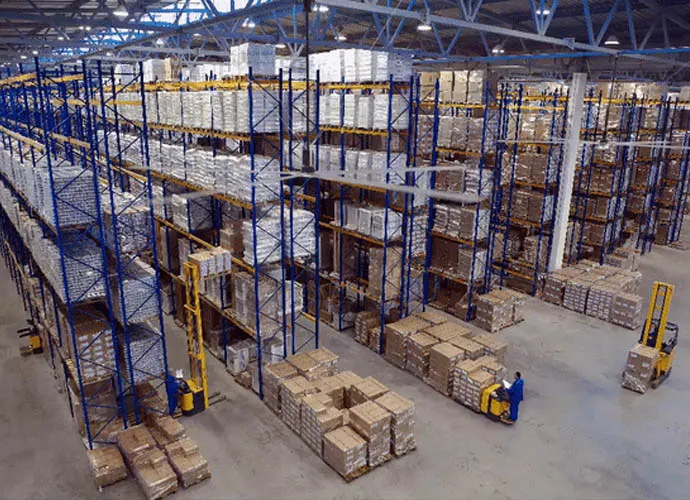
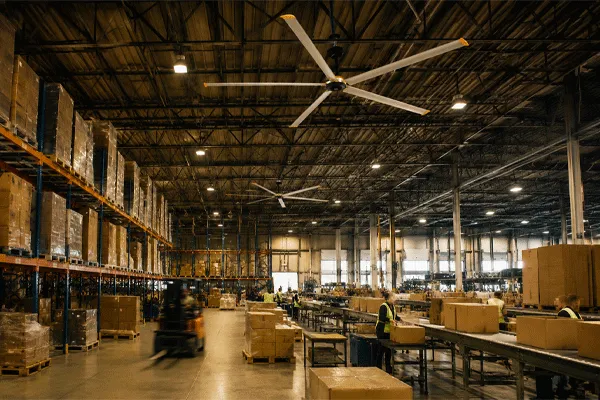
HVLS Fans in large Warehouse
4. Warehouse Cooling: Which Fan Size Works for 8?Feet to 24?Feet Ceilings?
| Ceiling height |
Recommended Diameter |
Coverage |
Fan Speed (RPM) |
| 8?ft |
8?ft |
5?000?ft? |
80 |
| 16?ft |
14?ft |
11?000?ft? |
65 |
| 24?ft |
20?ft |
18?000?ft? |
55 |
| 30?ft+ |
24?ft |
24?000?ft? |
50 |
Small fans struggle here; big HVLS fans thrive. Larger fans equal fewer units, lower install labor, and running cost <?$1/day.
5. Comparing Big Ass Fans, Hunter Industrial, and Other Fans of?2025
Big Ass Fans pioneered the category, but best HVLS fan performance now depends on motor torque, blade profile, and software.
| Feature |
Big Ass Fans |
Hunter Industrial |
KUUL Fans |
| IoT Analytics |
? |
? |
?? |
| Energy?efficient Motor |
PM |
AC |
Direct drive |
| Fan blades |
6 |
5 |
5 aero?foil |
| Warranty |
15 yrs |
10 yrs |
15 yrs |
Industry insight
The global fan market shifts toward smart BMS connectivity where building management systems auto?adjust fan speed to load and weather.
See how M750 Series HVLS Fans stack up in efficiency and performance.
6. Life?Cycle Cost: Running Cost vs. Pedestal Fans and Small Fans
Chart – 10?Year Energy & Maintenance Cost

10?Year Energy & Maintenance Cost
Results prove significant energy savings with HVLS: $8.5k vs. $48k over a decade.
Plus, easy to install kits mean downtime under 2?hours.
7. Smart Control Options & Integration with Building Management Systems
Modern commercial HVLS fans speak BACnet, Modbus, and cloud APIs. That means:
- Auto?ramp for evaporative cooling
- Fire?alarm shut?down at 149?°F
- Scheduled ventilation pulses to clear fumes
- Touchscreen zones for various commercial areas: pick?lines, cafeterias, labs.
Our control options include adaptive cruise that trims RPM to maintain set airflow and target energy efficiency.

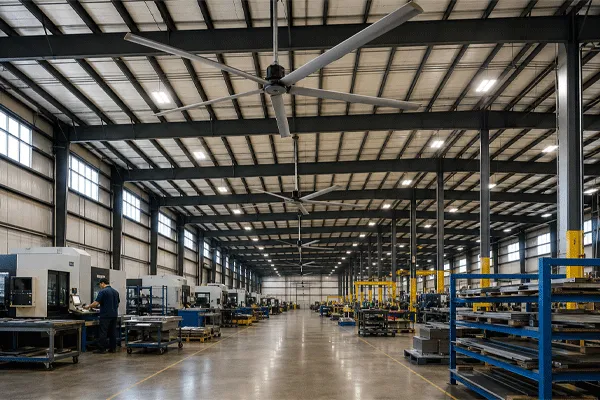
HVLS fan for commercial places
8. Case Study: Significant Energy Savings in Industrial Environments
Site: 120?000?sq?ft automotive press shop
Problem: 35?°C floor temps, condensate rust
Solution: Seven 22?ft industrial ceiling fans with low?speed fans algorithm
Outcome:
- Energy savings: 112?MWh/year (?38?% HVAC)
- Productivity: +9?% thanks to cooler lines
- Reduce humidity events by 70?%
Full detail in? commercial building success story.
9. Frequently Asked Questions – Everything Buyers Ask About Commercial HVLS Fans
How much volume of air does one HVLS fan move?
: Up to 260?000?CFM—perfect for large industrial sheds.
Will fans work with evaporative coolers?
: Yes, mixing improves pad efficiency by 15?% for cooling and ventilation.
What ceiling height is too low?
: Below 8?feet is tough; choose wall?mounted commercial fan instead.
Do HVLS fans heat rooms in winter?
: They don’t create heat; they recirculate warm air, slashing heating and cooling costs.
Are they noisy?
: 40?50?dB—quieter than office AC.
10. Action Steps & Checklist to Pick the Best?HVLS Fans Today
- Audit airflow—map industrial environments and large spaces.
- Choose blade length for your ceiling height (8?ft to 24?ft).
- Compare warranties and efficiency and reliability.
- Verify supplier install crews & spares.
- Request ROI from? How to Choose a HVLS Fan guide.
Key Takeaways
- HVLS fan technology tops the fan market for 2025 in efficiency and performance.
- A single unit covers large volumes of air in industrial and commercial halls while lowering energy consumption.
- Look for best HVLS ceiling fans with aero?foil fan blades, smart motors, and BMS links.
- Proper sizing attacks hot and cold spots and yields substantial energy savings within 18?months.
Contact the team behind these insights—your solution for large spaces starts with a quick airflow model today.
Ready to refresh your facility? Reach out for a no?obligation design, and feel the breeze of smarter, greener comfort.