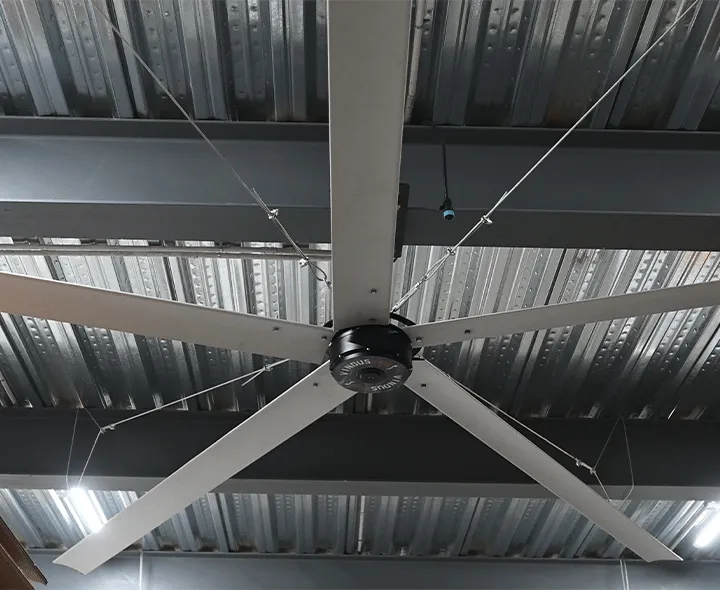
Stale air and uneven temperatures frustrate workers and managers in large buildings. These conditions become worse when a ceiling is too low or a?ventilatore da soffitto?is improperly installed. If you’re tired of stuffy, unproductive spaces, the?Ventilatore HVLS?is a powerful solution to deliver comfort and efficiency.
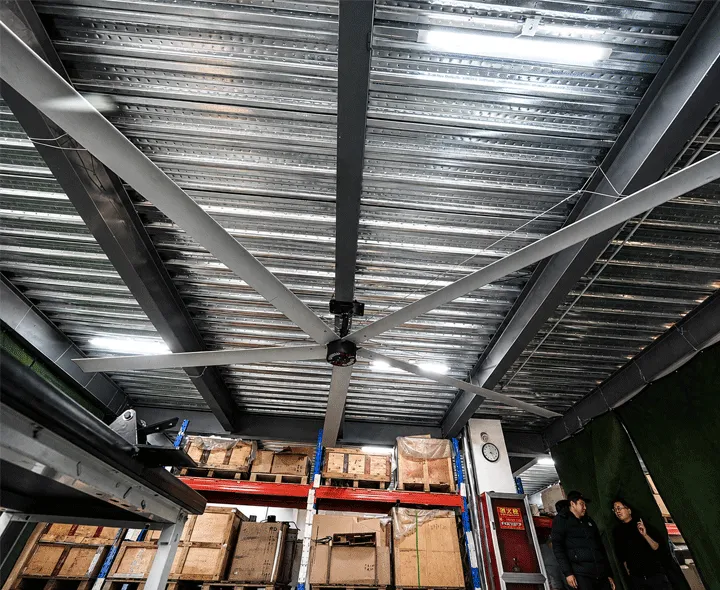
The minimum height requirement for an?Ventilatore HVLS?depends on allowing safe?fan clearance?between the?pale del ventilatore?and the occupants below. Typically, you need at least?7 feet above the floor?per il?ventilatore da soffitto—and in most industrial facilities, a?soffitto?Di?9 piedi?or higher is recommended. This?sdoganamento?ensures ideal?flusso d'aria?and safe operation, preventing any contact with equipment or people.

HVLS Fan Clearance Diagram
1. What Is a Ceiling Fan vs. an HVLS Fan: Understanding Key Differences
UN?ventilatore da soffitto?is a staple in many homes, offices, and commercial buildings. It hangs from the?soffitto?to promote?circolazione dell'aria?and control temperature more cost-effectively than an air conditioner. But a typical residential?ventilatore da soffitto?differs vastly from an?Ventilatore HVLS—which stands for High-Volume, Low-Speed fan—especially in?progettazione del ventilatore?and performance.
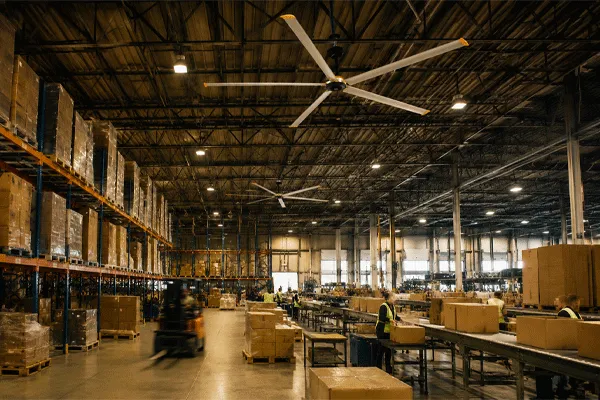
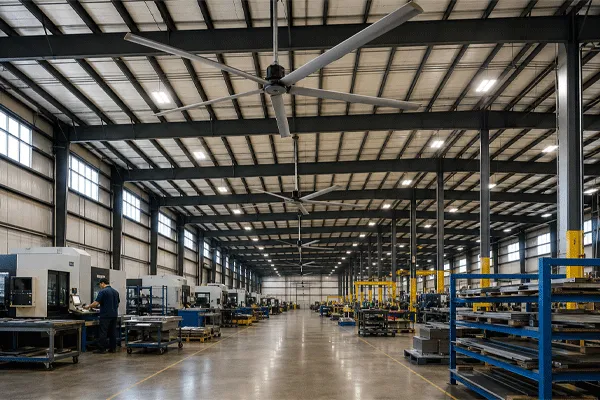
UN?Ventilatore HVLS?is a specialized?ventilatore industriale?used primarily in factories,?magazzini, sports arenas, or agricultural facilities. These?i fan sono progettati?to operate at a?bassa velocità, yet move large volumes of?aria calda?or cool air around a vast area. Unlike a small ceiling fan, the?diametro del ventilatore?can span 6 feet, 12 feet, or even 24 feet. This?ventilatore più grande?size pushes a great deal of air downward, achieving robust?flusso d'aria.
Key Characteristics
- Lama?length: An HVLS typically has a?lama?that’s several times longer than a standard?pala del ventilatore da soffitto.
- Fan clearance: With a large?diametro del ventilatore, IL?sdoganamento?required between the blades and the floor is critical for safety.
- Applicazione:?I ventilatori HVLS aiutano?with temperature control in expansive spaces, while smaller?ventilatori da soffitto?cater more to domestic settings.
Nota del settore: At our?produzione ventilatori hvls?plants, we design and produce advanced?HVLS industrial?units that accommodate both?bassa velocità?operation and maximum?flusso d'aria for large-scale applications.

Ventilatore HVLS
2. Why Is Clearance Important When Installing HVLS Fans?
Quando?installing a fan, it’s important to think about more than just aesthetics.?Fan clearance?is a major concern because it keeps the?pala del ventilatore?away from personnel, equipment, and overhead obstructions. A high?soffitto?typically allows for comfortable movement beneath the fan without reducing the open workspace.
Additionally, the minimum height requirement for an HVLS unit ensures the?fan is safe and secure. Se?fan blades and the ceiling?are too close, the?flusso d'aria?becomes restricted, leading to reduced cooling or heating efficiency. Likewise, if the?pala del ventilatore?is mounted too low, it can pose a hazard for workers, shelving, or forklift operations.
Caso di studio: A busy distribution center installed?più fan?with each?diametro del ventilatore?measuring around 12 feet. By adhering to recommended?sdoganamento?guidelines, they successfully maintained the needed?circolazione dell'aria?at floor level while avoiding contact with tall equipment or stacked pallets.
3. How Does Ceiling Height Affect HVLS Fan Performance?
Altezza del soffitto?is one of the biggest factors in?scegliere il giusto?ventilatore per il tuo spazioSe il?soffitto?is too low—say, under?9 piedi—you may struggle to find the distance between fans and the people walking around beneath the blades. Ideally, you want at least?7 feet above the floor?for safety, but more space translates to better?flusso d'aria?e copertura.
In contrast, a higher?soffitto?can hold more?aria calda dal soffitto, which your?Ventilatore da soffitto HVLS?can gently push down, stabilizing the temperature. This function is especially valuable in winter, as the system redistributes?aria calda?trapped near the roof. Consequently, a taller?soffitto industriale—come un?16-foot ceiling?or more—often reaps greater benefit from these?fans in buildings.
Chart: Impact of Ceiling Height on HVLS Fan Coverage
| Altezza del soffitto |
Diametro consigliato del ventilatore |
Coverage Efficiency |
| 9–12 ft |
~6 ft to 8 ft |
Moderate (smaller rooms) |
| 12–16 ft |
~8 ft to 12 ft |
Strong (ideal for mid-size) |
| 16+ ft |
~12 ft to 24 ft |
High (suitable for large spaces) |
4. What Are the Height Standards for Proper Fan Installation?
Height standards?vary depending on local building codes and the guidelines set by?esperti di ventilatori. However, a few rules of thumb remain consistent for a?ventilatore da soffitto?o un?Ventilatore HVLS.
- At least 7 feet: The most common code requires?at least 7 feet?of distance from the fan’s lowest point to the floor. This ensures people won’t come into contact with the blades.
- 9 feet from the wall: In some industrial or large commercial contexts, the fan must be positioned at least?9 feet from the wall?or structural columns, reducing collisions.
- Feet above the floor: For very large diameter fans—like?6 feet in diameter?or more—a building might require the blades be well above?7 feet above the floor?for clearance.
Following these?height standards?means the?fan will need?enough overhead room to spin safely. Similarly, if you have an?angled ceiling?or other architectural features, you may have to?lower the fan?with a downrod so it is not too?close to the ceiling, ensuring the best air distribution.
5. How to Choose the Right HVLS Ceiling Fan Size?
Scegliere il giusto?Dimensioni del ventilatore da soffitto HVLS?depends on multiple considerations. First, measure the?dimensione della stanza?or open area, including ceiling length and width. Next, account for how many obstacles—like rafters, lighting, or ducts—might restrict the?posizionamento del ventilatoreSe il?ceiling height allows?for a?ventilatore più grande, going up a size typically yields broader?flusso d'aria.
- Diameter of the Fan: UN?ventilatori di diametro maggiore?system can push more air downward, covering a bigger floor space.
- Ceiling Fan Height: Se hai un?lower ceiling height, select a more compact model to maintain adequate?fan clearance.
- Fan Models: Molti?modelli di fan?exist for different building types. Some are specifically designed as?ventilatori da soffitto per esterni?for patios or barns, while others thrive in strictly indoor environments.
Suggerimento professionale: For a?dimensione giusta della ventola hvls, match the blade span with the total area. For instance, a 20-foot blade span is great for a 15- to 20-foot?soffitto industriale.
6. Which Blade Size and Fan Blade Design Work Best for Airflow?
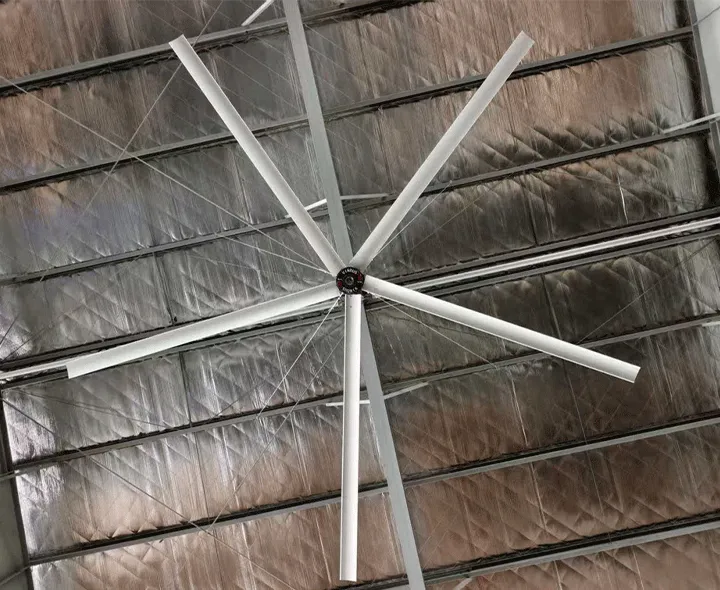
Blade size?plays a huge role in delivering stable?flusso d'aria. UN?ventilatore da soffitto?with small blades might need to spin faster to move the same volume of air as a?ventilatore più grande?with longer blades. Conversely, a big?pala del ventilatore?can produce significant?circolazione dell'aria?a un?bassa velocità, meaning quieter operation and less energy usage.
Fan blade?design also affects how well?fans can circulate air. Some fans feature contoured or curved edges that minimize drag, while others incorporate winglets that channel airflow more effectively. In an?HVLS fan installation, you want to ensure the?pala del ventilatore?is robust enough to handle continuous operation, especially in a busy factory or manufacturing plant.
Fatto: Our?produzione ventilatori hvls?line focuses on aerodynamic?pale del ventilatore?that create a consistent column of air stretching from the?fan to the ceiling?all the way down to the floor.
7. Is an Outdoor Ceiling Suitable for Large Industrial Fan Installation?
Many large businesses have semi-open or covered facilities, such as loading docks or open-air pavilions. If you have an?outdoor ceiling, installing a big?ventilatore da soffitto?O?Ventilatore HVLS?can be beneficial. Not only do these?i fan offrono?temperature moderation by moving cool breezes, but they also help keep insects at bay in certain areas.
When it comes to an?outdoor ceiling, verifying the?progettazione del ventilatore?is critical. Some?Ventilatori HVLS?come with weatherproof components—like corrosion-resistant finishes or enclosed motors—that endure humidity or temperature swings. Regardless, confirm the structure can support the weight of your?ventilatori da soffitto industriali. If it can, you’ll enjoy improved?flusso d'aria?while maintaining a comfortable environment for employees or visitors.
Mancia: For a truly?miglior fan?approach, check the IP rating or any rust-proof certification. That way, you’ll be sure your?fan is safe and secure?in outdoor conditions.

Large Industrial Fan in Greenhouses
8. What Is the Ideal Ceiling Fan Height and Fan Clearance?
Finding the perfect?altezza del ventilatore da soffitto?is essential for achieving optimum performance and safety. A standard recommended practice is ensuring the?fan is 6 feet?away from any obstacles like beams or shelving. Additionally, you want at least?7 feet above the floor?from the fan’s lowest point. For an?Ventilatore HVLS, you might need more?sdoganamento—especially if the?diametro del ventilatore?is quite large.
Common Guidelines for Ceiling Fan Height
- Living Spaces: For standard homes or offices, a small or medium?ventilatore da soffitto?can hang at around 7 to 8 feet.
- Industrial Spaces: With a?16-foot ceiling?or higher, you can comfortably mount a?ventilatore più grande. This setup allows for the strong downward thrust of air.
- High-Rise Facilities: Se il?soffitto?is extremely tall—like 25 feet or more—you might need special downrods to?lower the fan?al?right height, ensuring adequate?ventilatore in funzione?efficienza.
Data Point: IL?fan clearance?needed in a 30,000 sq. ft. warehouse is more stringent than in a small shop. Overlooking?fan height?can compromise the entire?sistema di ventilazione?performance.
9. Frequently Asked Questions About HVLS Ceiling Fan Installation
In this section, we’ll tackle some?domande frequenti?Di?installazione ventilatore a soffitto?in large commercial or industrial venues.
How can I find the distance between fans in a big space?
The general rule: leave a space equal to **at least one?diametro del ventilatore?between two HVLS units. This approach eliminates overlapping airstreams and ensures smooth?circolazione dell'aria.
Is it possible to install the fan without shutting down operations?
Yes, but you should schedule the?installazione del ventilatore?during a quiet shift if possible. You want minimal foot traffic?beneath the fan?to keep everyone safe. It’s also wise to rope off the?area where a person?might walk directly below.
What if I have a lower ceiling height?
UN?lower ceiling height?doesn’t necessarily exclude HVLS usage. However, you might opt for smaller?fans or different fans?that meet building codes. Always maintain at least?7 feet above the floor—and if local regulations differ, follow those.
How do HVLS fans help with winter heating?
I ventilatori HVLS aiutano?redistribute?aria calda?trapped at the top. Rather than letting that heat linger near the roof, the gently circulating fan moves it down, creating a more uniform temperature.
Bonus Tip: Many building owners reference the official?fans website?of reputable manufacturers or consult?esperti di ventilatori?for product specs and installation clarifications.
10. A Step-by-Step Guide to Installing Your HVLS Fan
Let’s wrap up with a?step-by-step guide?per?hvls fan installation. This approach ensures you?install the fan?effectively for maximum safety, compliance, and performance.
Step 1: Assess the Space
- Measure your?soffitto?dimensions, including any slope if you have an?angled ceiling.
- Note any obstructions: beams, lighting fixtures, sprinklers, or overhead conveyors.
Step 2: Choose a Fan
- Scegliere un ventilatore?that best matches your site: If you want an?outdoor ceiling?solution, pick a model rated for moisture. If you’re indoors, confirm the?ventilatore da soffitto?has the right downrod length.
- Verify it’s the?dimensione giusta della ventola hvls?for your floor area and?altezza del soffitto.
Step 3: Ensure the Fan Is Safe and Secure
- Identify the?altezza di montaggio?needed to keep the fan at least?7 feet above the floor.
- Use the proper bracket or mounting kit to attach the fan?close to the ceiling?but with enough gap so the motor can breathe.
Step 4: Perform the Fan Installation
- Shut off electricity at the main breaker to avoid accidents.
- Attach the bracket to your?soffitto industriale?or structural beam.
- Wire the fan motor according to instructions, and confirm everything is grounded.
Step 5: Test the Fan Operating
- Once the power is back, set the fan to a?bassa velocità. Watch for any wobbles, noises, or vibrations.
- Gradually increase the speed. If you detect a problem, turn off the fan and check your mounting and blade alignment.
Step 6: Final Adjustments
- Check if you need to?raise the fan?or use a longer downrod.
- Make sure the clearance is correct, the?fan would?not bump or touch any beams, and the entire system meets your local code.
Installation Guide: By sticking to these steps, you’ll avoid safety pitfalls and enjoy the full benefits of an?Ventilatore da soffitto HVLS—namely stable air temperature, improved productivity, and energy savings.
FAQs: More Details on Minimum Height and Installation
Does a fan need to be 9 feet from the wall to work properly?
In?applicazioni dei fan, assicurando la?fan is 6 feet?or more from walls or columns often suffices to reduce turbulence. For bigger spaces or a?ventilatori di diametro maggiore?arrangement,?9 feet from the wall?can optimize?circolazione dell'aria.
Can HVLS fans operate in smaller rooms?
Yes, as long as the?altezza del soffitto?E?sdoganamento?allow safe operation. Smaller?modelli di fan?exist for mid-sized rooms. However, always confirm a?minimum height requirement?so the?fan would?not risk collisions or injure anyone beneath it.
Is an HVLS fan suitable if I have a lower ceiling height?
You can still use HVLS technology in some cases. But if your?soffitto?is under?9 piedi, tuo?installazione del ventilatore?might violate local codes. Always check local regulations or consult?esperti di ventilatori.
Should I find the distance between the ceiling fan blade and overhead beams?
Assolutamente.?Distance between the ceiling?structure and the?pala del ventilatore da soffitto?is essential. Keeping a proper gap ensures unimpeded?flusso d'aria?and reduces noise.
Where can I learn more about installing your HVLS?
You can visit our main?HVLS Fans Website?for additional step-by-step guidance and to connect with a?esperti di ventilatori?team.
Punti chiave
- Ventilatore da soffitto?height and?fan clearance?are critical for safety and optimal?flusso d'aria.
- You often need?at least 7 feet?dal?pala del ventilatore?to the floor—some industrial spaces require more.
- For the best efficiency, match?dimensioni del ventilatore da soffitto hvls?al?dimensione della stanza?and confirm your?soffitto?can accommodate the?dimensione giusta della ventola hvls.
- I ventilatori vengono utilizzati?to move?aria calda?in winter, improving comfort and reducing heating costs.
- UN?step-by-step guide?ensures you safely?installing your hvls?for long-term performance.
- Installing ceiling fans?with downrods can help if you have an?angled ceiling?or an extremely high?soffitto industriale.
- IL?ventilatore giusto per il tuo spazio?means checking the?diametro del ventilatore, IL?dimensione della lama, and your?altezza del soffitto.
- I fan aiutano?reduce humidity and hot spots, benefiting employees in large work areas.
- Ventilatori HVLS?provide gentle, widespread coverage at?bassa velocità, making them ideal for broad, open facilities.
- For any environment—indoor or?outdoor ceiling—the?right height?assicura la?fan is safe and secure?and that?anche i fan?run efficiently.
By following these tips and guidelines, you’ll be on track to selecting the?miglior fan?for your facility while respecting the?minimum height requirement. If you have any questions, reach out to our?produzione ventilatori hvls?specialists so we can?aiutarvi?finalize?installazione del ventilatore?details. We’d be thrilled to assist you in?scegliere il giusto?Ventilatore HVLS?for maximum comfort and performance!