folgen Sie uns:
19th, May 2025
Viele Unternehmen k?mpfen mit hei?en, stickigen Arbeitsr?umen, hohen Energierechnungen und schlechter Luftbewegung. Bleiben diese Probleme unbehandelt, k?nnen sie die Produktivit?t verringern, die Kosten in die H?he treiben und Energie verschwenden. Aber es gibt eine einfache L?sung: intelligente, nachhaltige Ventilatoren - eine Innovation, die das Gefühl und die Funktion gro?er R?ume ver?ndert.
mehr lesen
16th, May 2025
Wir alle wollen saubere, frische Luft. Aber in gro?en Geb?uden - Fabriken, Sporthallen, Lagerhallen - ist die Luft still. Sie fühlt sich hei?, feucht oder staubig an. Manchmal riecht sie sogar. Diese Luft ist schlecht für die Menschen und schadet auch dem Gesch?ft. Die Arbeiter sind müde. Die Maschinen werden zu hei?. Die Stromrechnungen steigen.
mehr lesen
15th, May 2025
Wenn Ihr Arbeitsplatz zu hei?, zu kalt oder stickig ist, werden die Mitarbeiter müde, die Arbeit verlangsamt sich, und die Energierechnungen steigen. Warum ist das so? Gro?e Industrie- und Gewerbefl?chen sind schwer zu klimatisieren, weil die Luft mit alten Ventilatoren oder schwachen Klimaanlagen allein nicht gut bewegt werden kann. Denken Sie an den Kampf: schwitzende Arbeiter im Sommer, kalte Ecken im Winter und Geld, das Ihnen jeden Monat für Strom aus der Tasche gezogen wird.
mehr lesen
15th, May 2025
Many garages, from compact home workshops to sprawling service bays, struggle with poor air circulation. The result? Excess heat, rising humidity, stagnant air, and uncomfortable work conditions.?Traditional fans and AC units just don’t move enough air—often leaving hot spots, stuffy corners, and high electricity bills in their wake. This problem can make your garage an unpleasant place to work, store valuables, or maintain equipment, especially in the heat of summer or the chill of winter .
mehr lesen
14, Mai 2025
Big indoor spaces have a problem. Warehouses, factories, sports halls, and even big stores get hot, stuffy, and hard to breathe in. Air stands still. Heat builds up. This makes workers tired and slows them down. Machines overheat. Food spoils. Even in winter, warm air gets trapped at the top, while the floor stays cold. Simple fans don’t help. Why??They’re too small or weak. Air doesn’t reach where it’s needed. Energy bills go up as air conditioning works overtime, but the air still doesn’t move much.
mehr lesen
13th, May 2025
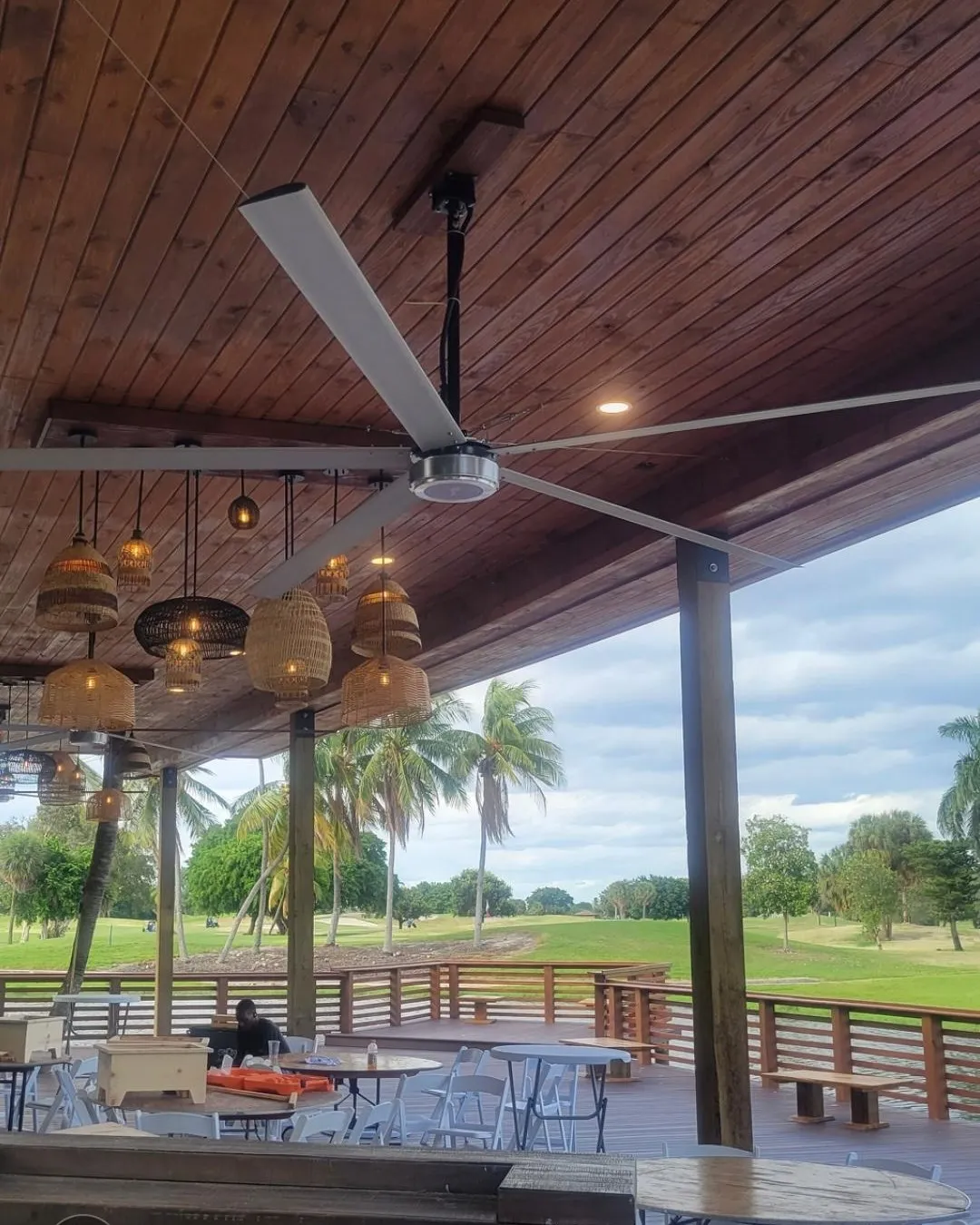
Big industrial ceiling fans, also called HVLS fans (High-Volume Low-Speed), move a lot of air but spin slowly. These are much bigger and stronger than the small fans you see at home. Some models can be as wide as 24 feet long. They are made for places like warehouses,?manufacturing plants, gyms, shops, and even farms where you need to keep lots of people—or goods—comfortable and safe. Want to know exactly how HVLS compares to normal fans?
mehr lesen